
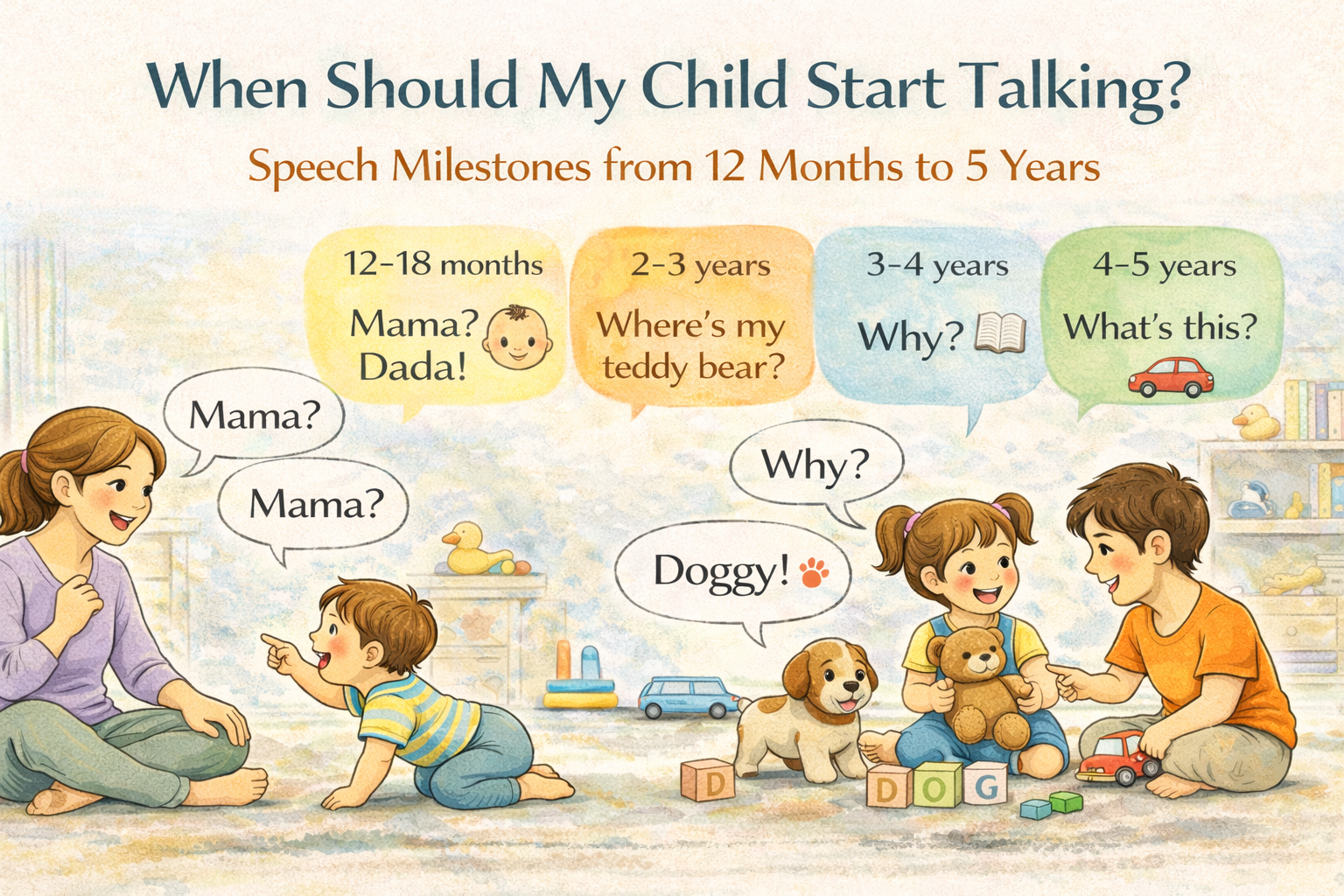
Speech Milestones from 12 Months to 5 Years
When should a child start talking?
As a parent, it’s completely natural to wonder whether your child’s speech and language development is on track. Many families ask, “Should my child be talking more by now?” or “Is this normal, or should I be worried?”
Children develop speech and language at different rates. However, there are expected milestones that help us understand when extra support may be helpful.
As a Speech and Language Therapist, I want to reassure you, noticing differences early is a positive step, not something to fear.
Speech and Language Milestones: What to Expect
12–18 months
At this stage, many toddlers:
- Use a few meaningful words (such as “mama,” “dada,” “more”)
- Understand simple instructions like “give it to me”
- Use gestures such as pointing or waving
- Enjoy songs, rhymes, and shared books
Red flag: No babbling, pointing, or attempts to communicate.
18–24 months
By age two, many children:
- Use around 50 words or more
- Begin putting two words together (e.g. “more milk”)
- Understand familiar questions
- Try to copy new words
Red flag: Very few words, limited understanding, or frustration due to difficulty communicating.
When should a child start talking?
2–3 years
At this age, children often:
- Use short sentences (2–3 words)
- Ask simple questions
- Follow two-step instructions
- Are understood by familiar adults most of the time
Red flag: Speech is very unclear, few words, or limited interest in communication.
When should a child start talking?
3–4 years
Children typically:
- Use longer sentences
- Talk about their day
- Ask lots of “why” questions
- Are understood by most people, not just family
Red flag: Difficulty forming sentences or being understood by unfamiliar listeners.
When should a child start talking?
4–5 years
By school age, many children:
- Speak clearly in full sentences
- Use grammar more accurately
- Tell simple stories
- Understand instructions at nursery or school
Red flag: Ongoing unclear speech, difficulty expressing ideas, or struggling to follow instructions.
When should a child start talking?
Speech Delay vs “They’ll Grow Out of It”
Some children do catch up naturally, but many don’t without support. Speech and language difficulties don’t always resolve on their own, and waiting too long can increase frustration, behaviour challenges, and confidence issues.
Early support can make a huge difference, especially during the early years when the brain is most flexible.
What Causes Speech Delays?
Speech and language delays can be linked to:
- Hearing difficulties
- Developmental language delay
- Autism
- Attention and listening difficulties
- Limited interaction opportunities
- Family history of speech difficulties
Sometimes, there isn’t one clear cause, and that’s okay.
What If I’m Worried?
If you’re in the UK, you may be facing long NHS waiting lists, which can feel incredibly stressful. While you’re waiting, there are still things you can do to support your child.
Simple strategies such as:
- Talking during everyday routines
- Following your child’s lead in play
- Reducing pressure to “perform”
- Modelling simple language rather than correcting
These approaches are explained in more detail in the speech therapy books and printable PDF resources available on this website, created specifically to help parents support communication at home.
When to Seek Speech and Language Therapy
Trust your instincts. If you feel something isn’t quite right, it’s worth seeking advice. A speech and language assessment can help identify whether your child needs support, and what kind.
Early help isn’t about labels. It’s about giving your child the tools they need to communicate confidently.
Every child develops differently, but you don’t need to wait and worry alone. Support, guidance, and practical tools can make everyday communication easier and more enjoyable for both you and your child.
If you’d like structured, therapist-led support, explore the books, printable guides, and resources available here on Kids SLT Essentials, all designed to support speech and language development in real life.
For more detailed information and advice, grab a copy of my book from Amazon – https://mybook.to/SLT4Toddlers