Play isn’t just fun — it’s one of the most effective ways children learn language. This is why speech and language therapy, especially in the early years, is often play-based.
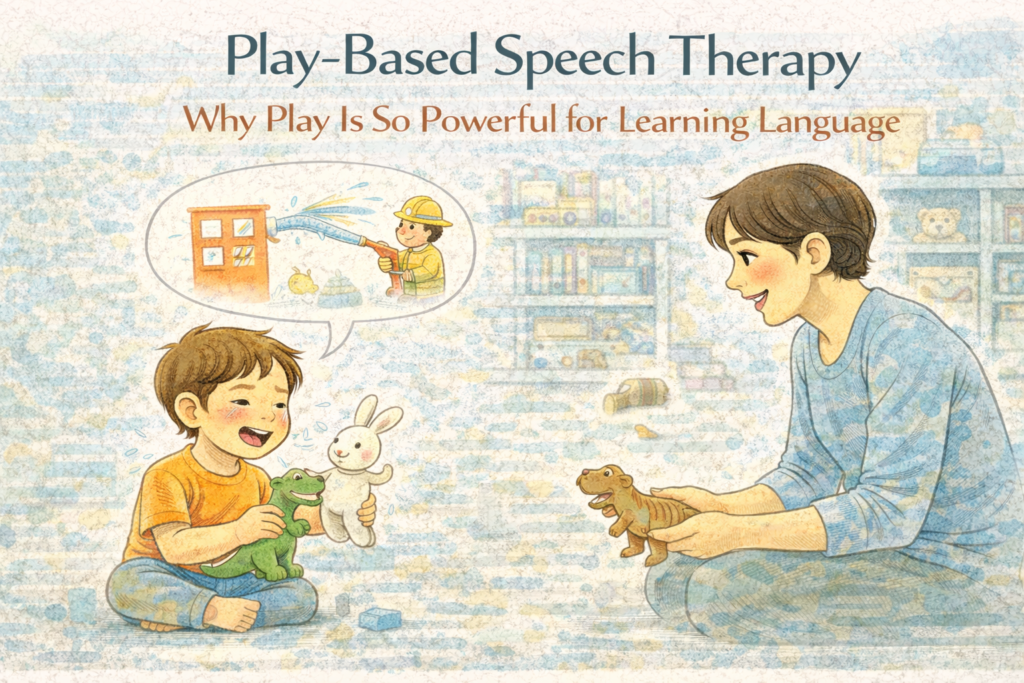
When children are relaxed and engaged, communication develops more naturally.
Why Play Supports Speech and Language
Children learn best when:
- They feel safe and connected
- Activities are meaningful to them
- There is no pressure to “get it right”
Play creates the perfect environment for learning because it’s motivating and child-led.
What Is Play-Based Speech Therapy?
Play-based speech therapy uses:
- Toys, games, and everyday objects
- Activities chosen by the child
- Natural interaction rather than drills
The focus is on communication, not performance.
Why Play Supports Speech and Language
How Play Builds Language Skills
Through play, children practice:
- Turn-taking
- Listening and attention
- Understanding words and instructions
- Using new vocabulary
- Building sentences
- Social communication skills
Even simple play helps develop important foundations for speech and language.
Why Play Supports Speech and Language
Examples of Language-Rich Play
Language learning doesn’t need specialist toys. Everyday play works well:
- Pretend play (cars, dolls, animals)
- Building and stacking
- Cause-and-effect toys
- Books and songs
- Outdoor play
What matters most is interaction, not the toy itself.
3 Simple Ways to Support Language Through Play
1. Follow your child’s lead
Let them choose the activity and join in.
2. Use simple language
Short phrases are easier to understand and copy.
3. Repeat and model
Show your child how language works without asking them to repeat.
These strategies are central to speech and language therapy.
What If Your Child Doesn’t “Play Typically”?
Some children play differently — and that’s okay. Play-based therapy adapts to your child’s interests and communication style, including autistic children and children with additional needs.
There is no “right” way to play.
Supporting Play While Waiting for Therapy
Many families face long NHS waiting times. While waiting, play is one of the easiest and most effective ways to support communication at home.
The speech therapy books and printable PDFs available on Kids SLT Essentials offer practical ideas to help parents use play to build language naturally and confidently.
Play is how children explore, connect, and learn language.
By slowing down, joining in, and keeping communication pressure-free, you’re already
supporting your child’s speech more than you might realise.