
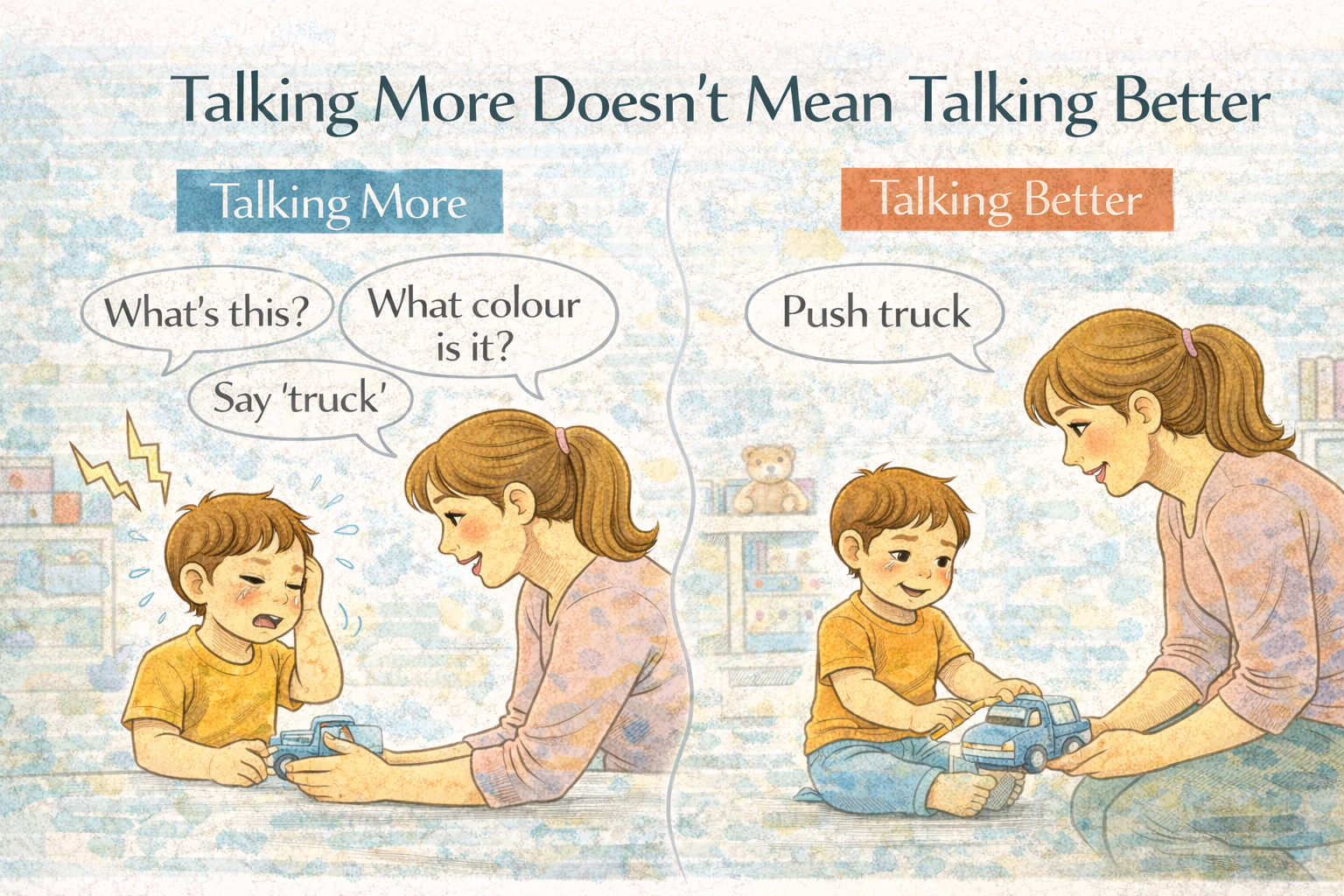
When a child has a speech delay, many parents naturally try to help by talking more, asking more questions, or encouraging their child to repeat words. While this comes from a good place, more talking isn’t always more helpful.
In some cases, it can actually make communication harder.
How to Really Help Your Child’s Speech
Why Too Much Talking Can Be Overwhelming
Children who are still developing speech and language may struggle when:
- Language is fast or complex
- Too many questions are asked
- They feel pressure to respond
- There’s little time to process
This can lead to children switching off, becoming frustrated, or avoiding communication altogether.
How to Really Help Your Child’s Speech
Quality Over Quantity
What matters most is how you talk, not how much you say.
Effective support focuses on:
- Simple, clear language
- Meaningful interaction
- Giving children space to respond
This creates a calmer, more supportive communication environment.
How to Really Help Your Child’s Speech
3 Better Ways to Support Speech
1. Slow down your language
Use short phrases and pause between sentences.
2. Comment instead of question
Describe what your child is doing rather than asking them to label or answer.
3. Match your child’s level
If they’re using one word, model one or two words — not full sentences.
How to Really Help Your Child’s Speech
These strategies are commonly used in speech and language therapy.
Signs Your Child May Be Feeling Pressured
Children may avoid talking if they:
- Turn away during conversation
- Use gestures instead of words
- Get upset when asked questions
- Become quieter when attention is focused on speech
Reducing pressure often leads to more communication, not less.
Supporting Speech While Waiting for Therapy
With long NHS waiting times, many parents feel unsure how to help. Creating a relaxed communication environment at home can make a real difference.
The speech therapy books and printable PDFs available on Kids SLT Essentials offer practical guidance to help parents support speech development without pressure or overwhelm.
Talking more isn’t the answer — talking better is.
By simplifying language and following your child’s lead, you create space for communication to grow naturally.