
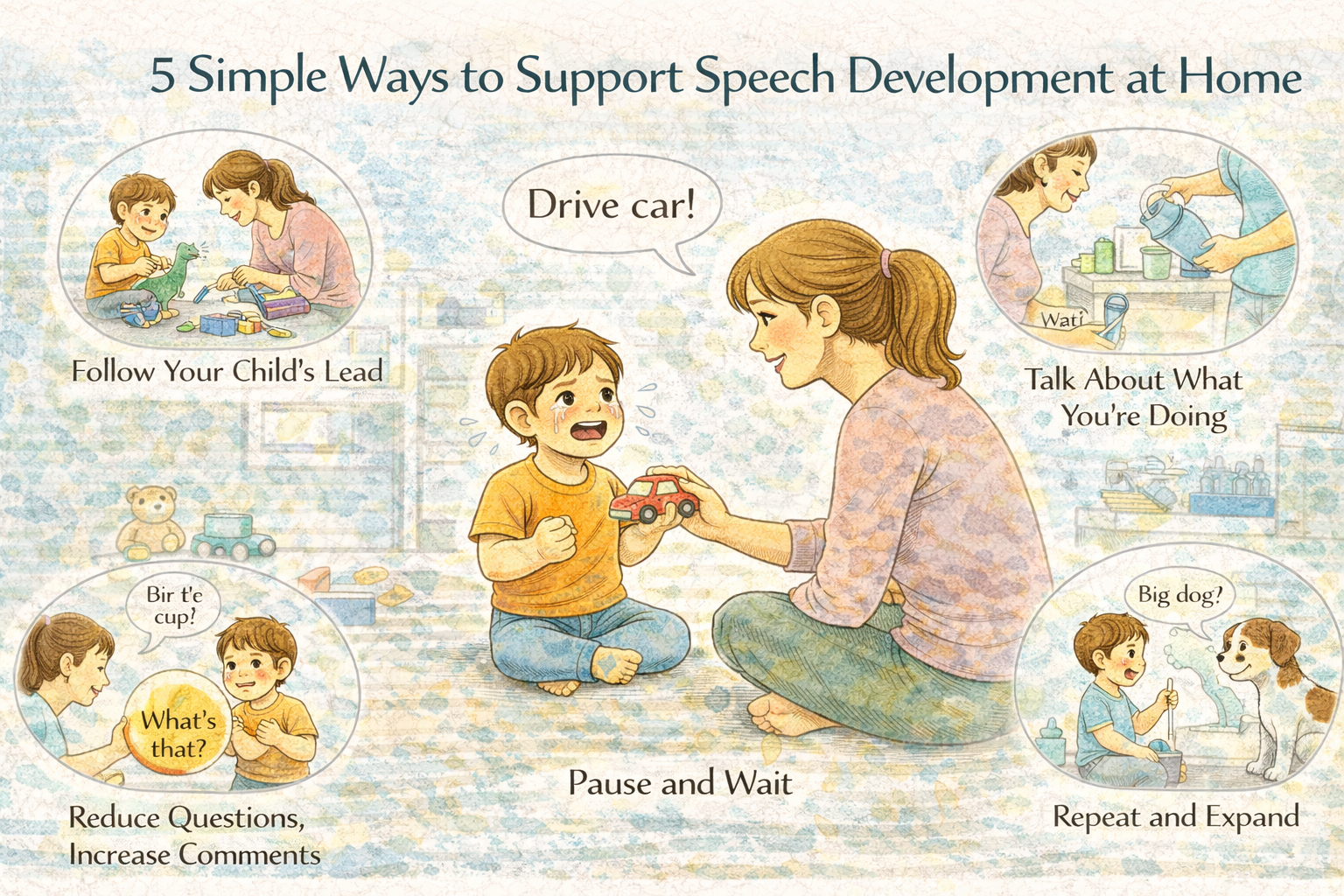
You don’t need specialist equipment, flashcards, or long practice sessions to support your child’s speech and language development. In fact, everyday interactions are often the most powerful.
Speech therapy strategies work best when they fit naturally into family life.
Why Everyday Interaction Matters
Children learn language best when:
- They feel relaxed and connected
- Language is meaningful and relevant
- There is no pressure to “perform”
Support Speech Development at Home
Simple changes in how we talk and play can support speech development more than structured drills.
1. Follow Your Child’s Lead
Watch what your child is interested in and talk about that.
- If they’re playing with cars, talk about cars
- If they’re stacking blocks, describe what they’re doing
This keeps communication motivating and natural.
Support Speech Development at Home
2. Talk About What You’re Doing
Narrate everyday routines:
- “Shoes on”
- “Cutting apple”
- “Water in cup”
Short phrases are easier to understand and copy than long sentences.
Support Speech Development at Home
3. Reduce Questions, Increase Comments
Too many questions can feel like pressure. Try:
- Commenting instead of testing
- Saying “big ball” rather than “what’s that?”
This helps children hear language without feeling put on the spot.
4. Pause and Wait
Silence can be powerful.
- Pause during play or routines
- Look expectantly
- Give your child time to respond
Many children need longer to process and respond.
5. Repeat and Expand
If your child says a word, gently build on it.
- “Dog” → “big dog”
- “Drink” → “more drink”
This models the next stage of language naturally.
Support Speech Development at Home
What If You’re Waiting for Support?
Many families face long NHS waiting times for speech and language therapy. While waiting, consistent everyday strategies can support progress and reduce frustration.
The speech therapy books and printable PDFs available on Kids SLT Essentials provide clear, step-by-step guidance to help parents support speech and language development at home with confidence.
You don’t need to do more — you just need to do things a little differently.
Small changes, repeated daily, can make a meaningful difference to your child’s communication.