
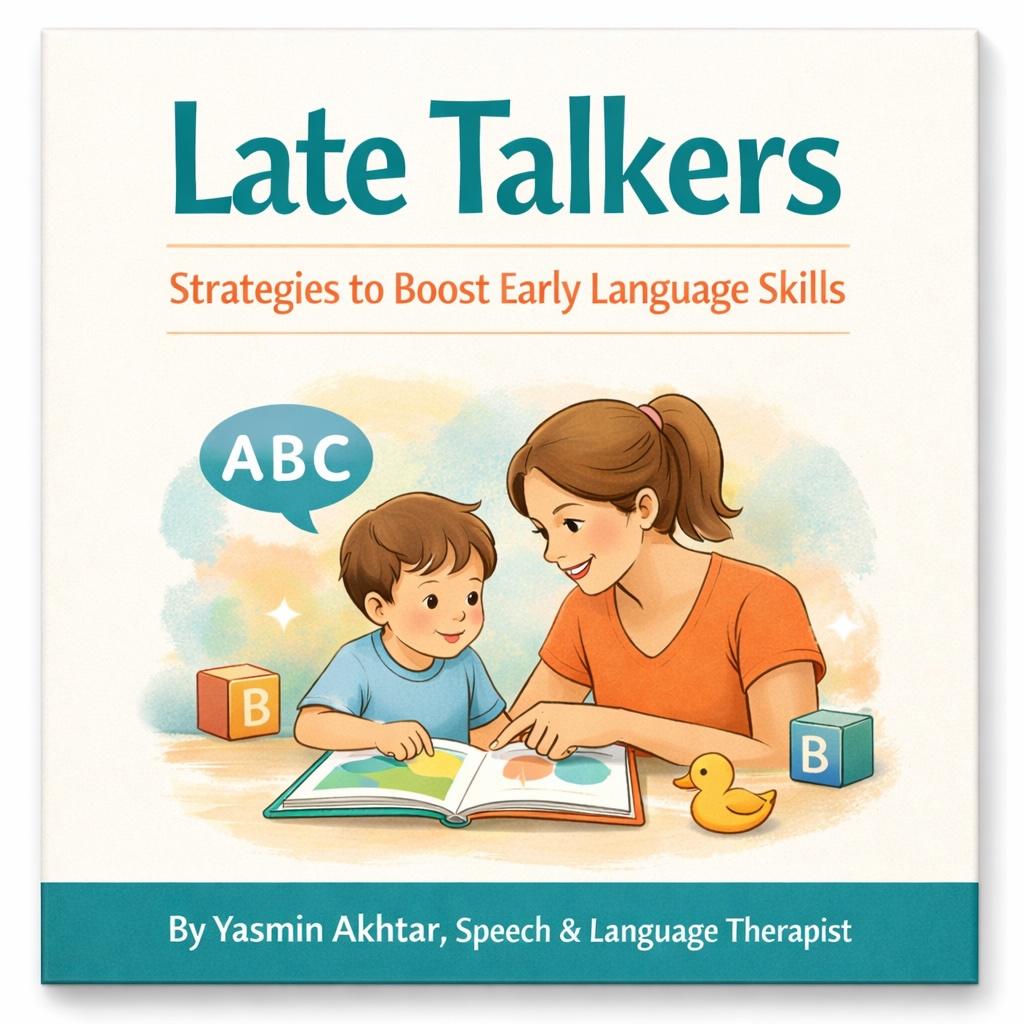
Supporting Late Talkers
£6.99
A practical guide to helping late talkers build early words and communication. Includes simple, speech therapist-led strategies to support talking through play, routines, and everyday interaction.
By Yasmin Akhtar, Speech & Language Therapist
If your toddler understands some language but isn’t using as many words as expected, or seems slower to start talking than other children their age, Supporting Late Talkers is a practical parent guide designed to help. Created by a Speech and Language Therapist, this downloadable PDF explains what it means to be a “late talker,” what signs to look out for, and how to support early communication at home in a way that feels realistic, playful, and low pressure.
Many children develop speech and language at different rates, and it can be hard to know when to wait, when to support, and when to seek extra help. This guide helps you understand the difference between a child who is simply taking a little longer to talk and a child who may need more targeted support. It also explains the early communication skills that sit underneath talking, such as attention, understanding, interaction, play, imitation, and using gestures to communicate.
Inside, you’ll find practical ways to build communication through everyday routines, play, songs, books, and simple interactions at home. The guide focuses on helping you create more opportunities for your child to communicate, model useful language, and support early words without pressure or constant prompting.
This guide includes:
- A parent-friendly explanation of what it means to be a late talker
- Help understanding early signs, red flags, and when to seek support
- Practical strategies to encourage early words and communication at home
- Ideas for building attention, interaction, play, and understanding alongside talking
- Support for reducing pressure and making communication feel natural and enjoyable
- Everyday examples and parent-friendly advice you can use straight away
Ideal for parents of toddlers and young children who are not yet talking as expected, this guide offers reassurance, clarity, and practical next steps. Warm, realistic, and full of everyday strategies, Supporting Late Talkers will help you feel more confident about how to move communication forward while keeping it playful, connected, and child-friendly.