
Speech Delay vs Language Delay: What’s the Difference?
Many parents are told their child has a speech delay or a language delay, but these terms are often used interchangeably, which can be confusing. Understanding the difference can help you feel clearer about what support your child may need.
As a Speech and Language Therapist, I often reassure families that both are common and both are very supportable.
Speech Delay vs Language Delay
What Is a Speech Delay?
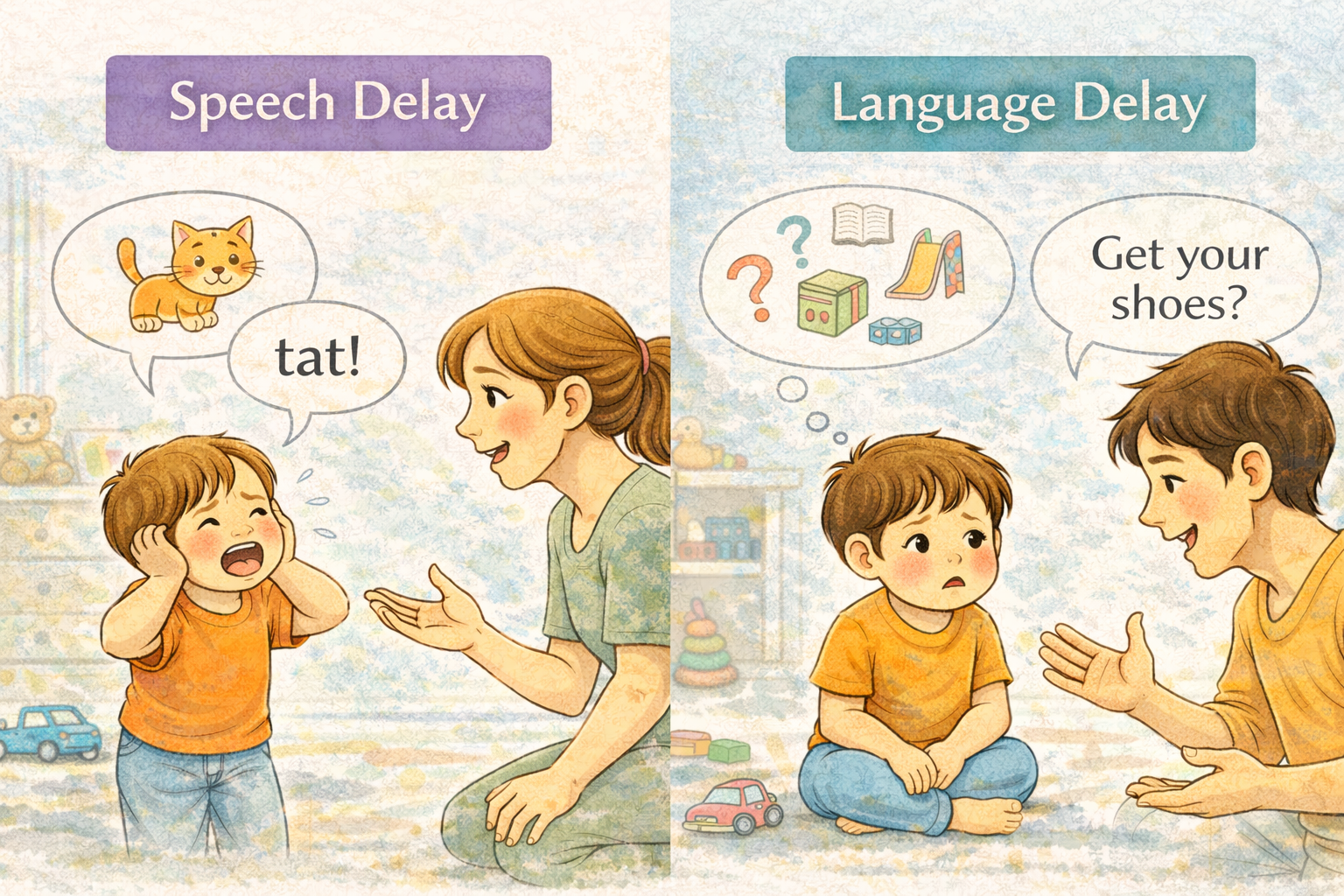
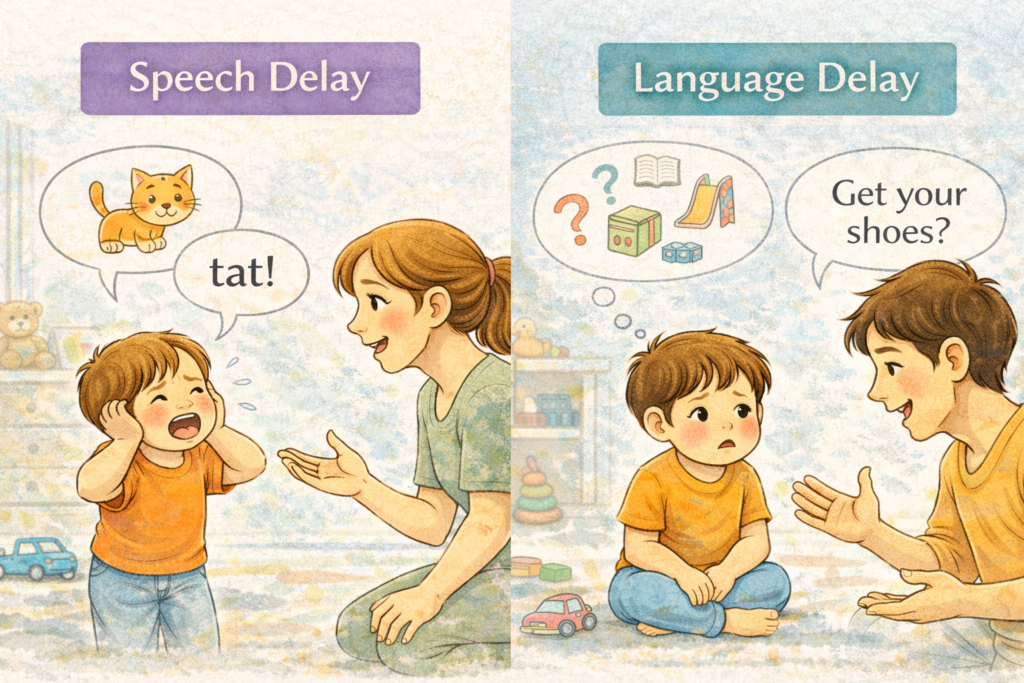
A speech delay affects how a child says sounds and words, not what they understand.
Children with a speech delay may:
- Know what they want to say but struggle to pronounce words clearly
- Use the wrong sounds (e.g. “tat” for “cat”)
- Be hard for others to understand
- Get frustrated when speech isn’t clear
Their understanding of language is often age-appropriate.
Examples of speech difficulties include:
- Sound delays
- Articulation difficulties
- Phonological delays
- Stammering (in some cases)
What Is a Language Delay?
A language delay affects how a child understands and uses words, sentences, and meaning.
Children with a language delay may:
- Struggle to understand instructions
- Use fewer words than expected
- Find it hard to put words together
- Have difficulty expressing thoughts or feelings
Language delays can affect:
- Receptive language (understanding)
- Expressive language (using words)
- Or both
Can a Child Have Both?
Yes — and many do.
Some children have:
- A speech delay and a language delay
- Speech that is unclear and difficulty forming sentences
This is why a proper speech and language assessment is so important.
How Can You Tell the Difference at Home? Speech Delay vs Language Delay
Here are some simple clues:
Your child may have a speech delay if they:
- Understand instructions well
- Communicate confidently using gestures
- Get frustrated when speech isn’t understood
Your child may have a language delay if they:
- Struggle to follow instructions
- Use very few words
- Have difficulty forming sentences
- Appear confused or disengaged
Speech Delay vs Language Delay– Why the Difference Matters
Knowing whether the difficulty is speech, language, or both helps ensure your child gets the right support, not just “more talking.”
Speech therapy strategies differ depending on the underlying need.
What Causes Speech and Language Delays?
Possible factors include:
- Hearing difficulties
- Developmental language disorder (DLD)
- Autism
- Attention and listening difficulties
- Family history
- Limited language exposure (e.g. reduced interaction)
Often, there is no single cause, and that’s okay.
What If I’m Waiting for NHS Speech Therapy?
Many families face long NHS waiting times, which can feel overwhelming. While waiting, there are still ways to support your child at home.
Using simple strategies such as:
- Modelling language rather than correcting
- Reducing pressure to repeat words
- Building language into daily routines
These approaches are explained clearly in the speech therapy books and printable PDFs available on Kids SLT Essentials, created to help parents feel confident supporting communication.
Speech Delay vs Language Delay – When Should You Seek Support?
Consider seeking advice if:
- Your child isn’t meeting speech or language milestones
- Speech is difficult for others to understand
- Your child becomes upset or withdrawn
- You feel unsure or worried — even if others say “wait”
Speech Delay vs Language Delay – Early support leads to better outcomes and less frustration for everyone.
Speech and language delays are common, and support works. Understanding the difference empowers you to act, not worry in silence.
For more detailed advice and support, click here to get my book https://mybook.to/SLTforkids
You don’t need to wait for things to “sort themselves out.”
Explore the books and practical speech therapy resources on this website to start supporting your child today.