
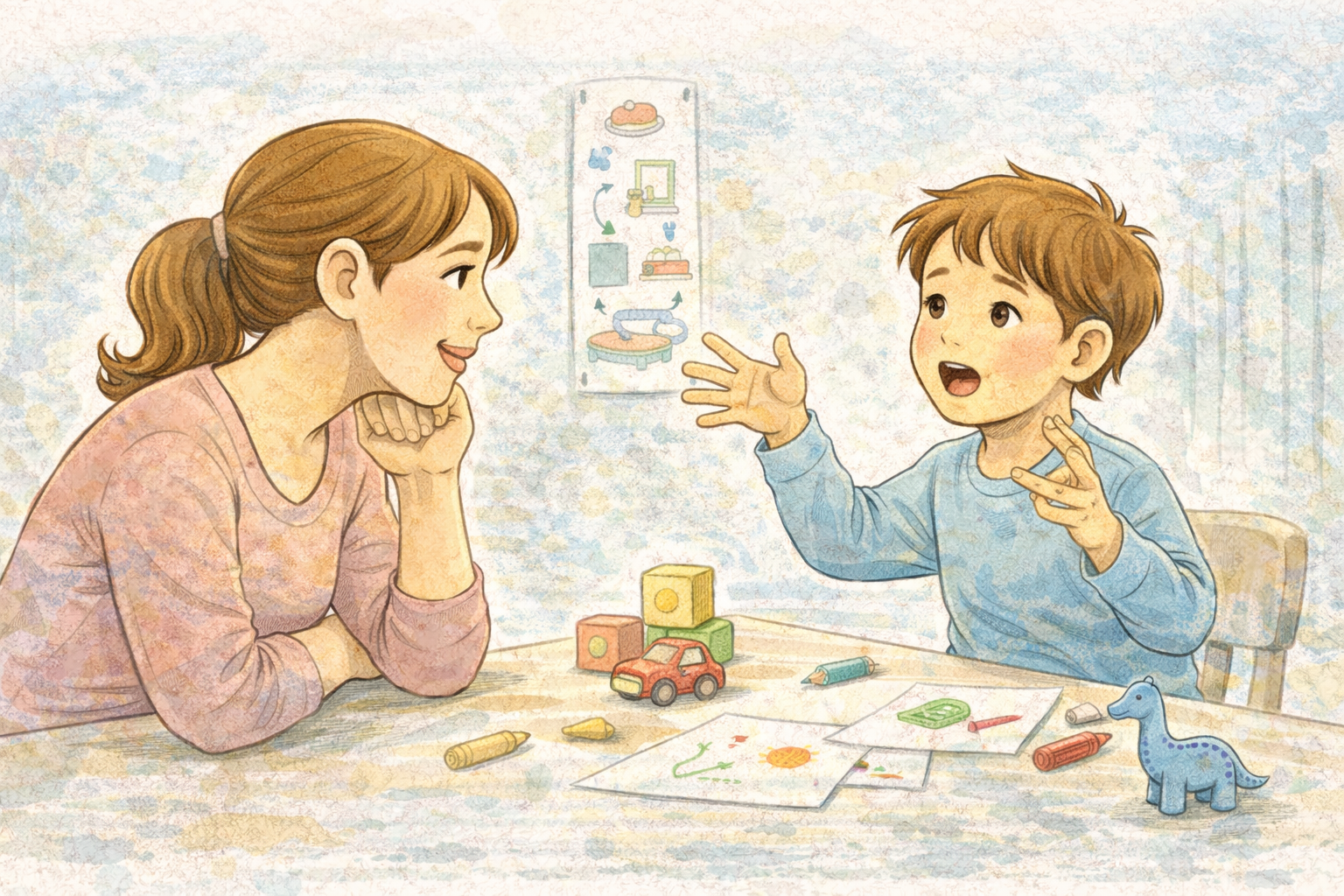
There are two key parts to language development:
- Receptive language – what your child understands
- Expressive language – how your child uses words to communicate
Some children have strong understanding but delayed expressive language. This means they know what’s going on, but struggle to turn their thoughts into words.
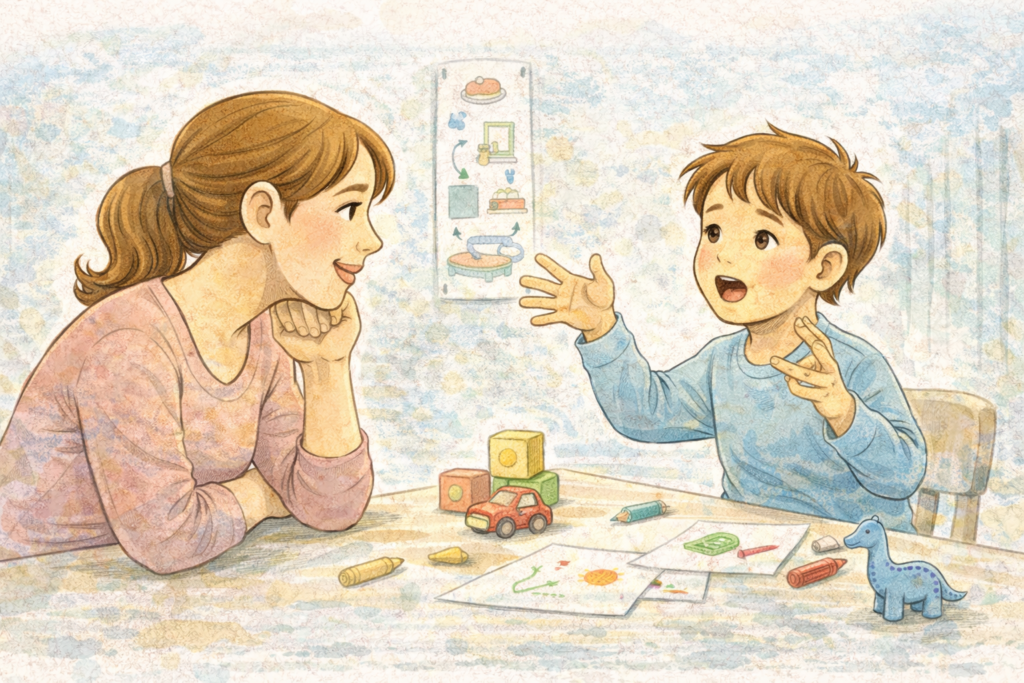
Understanding vs Talking: What’s the Difference?
Why This Can Happen
Children who understand well but talk less may:
- Be late talkers
- Have an expressive language delay
- Feel pressure or anxiety around speaking
- Prefer gestures or sounds
- Be very observant and cautious communicators
In some cases, this profile can also be seen in autistic children — but understanding alone does not mean autism.
Signs to Look Out For
Understanding vs Talking: What’s the Difference?
You may want to seek advice if your child:
- Uses very few words compared to peers
- Gets frustrated when trying to communicate
- Relies heavily on pointing or leading adults
- Rarely copies words
- Isn’t combining words by age two
Trusting your instincts matters — you know your child best.
Understanding vs Talking: What’s the Difference?
3 Simple Ways to Encourage Talking (Without Pressure)
Talking more doesn’t mean asking more questions. Try these instead:
- Comment more than you question
Describe what your child is doing instead of testing them. - Pause and wait
Give your child time to respond without filling the silence. - Expand their attempts
If they gesture or use one word, model a short phrase.
These strategies reduce pressure and support expressive language development.
Understanding vs Talking: What’s the Difference?
Children who understand more than they say are often taking everything in. With the right support, their expressive language can develop steadily and confidently.
You don’t need to wait in silence — gentle, informed support now can ease frustration for both you and your child.