
Many parents notice early differences in their toddler’s communication, interaction, or play and wonder whether autism could be a possibility. These thoughts can feel heavy—especially when online advice is conflicting or NHS waiting times are long.
Early signs don’t always mean a diagnosis, but early awareness and support can make a real difference.
What Is Autism?
Autism is a neurodevelopmental difference, not an illness. Autistic children experience the world differently, particularly in how they:
- Communicate
- Interact socially
- Process sensory information
Autism is a spectrum, meaning every child presents differently.
Early Signs of Autism in Toddlers (18 Months–3 Years)
Some early signs linked to communication and interaction may include:
Communication Differences – Early Signs of Autism in Toddlers
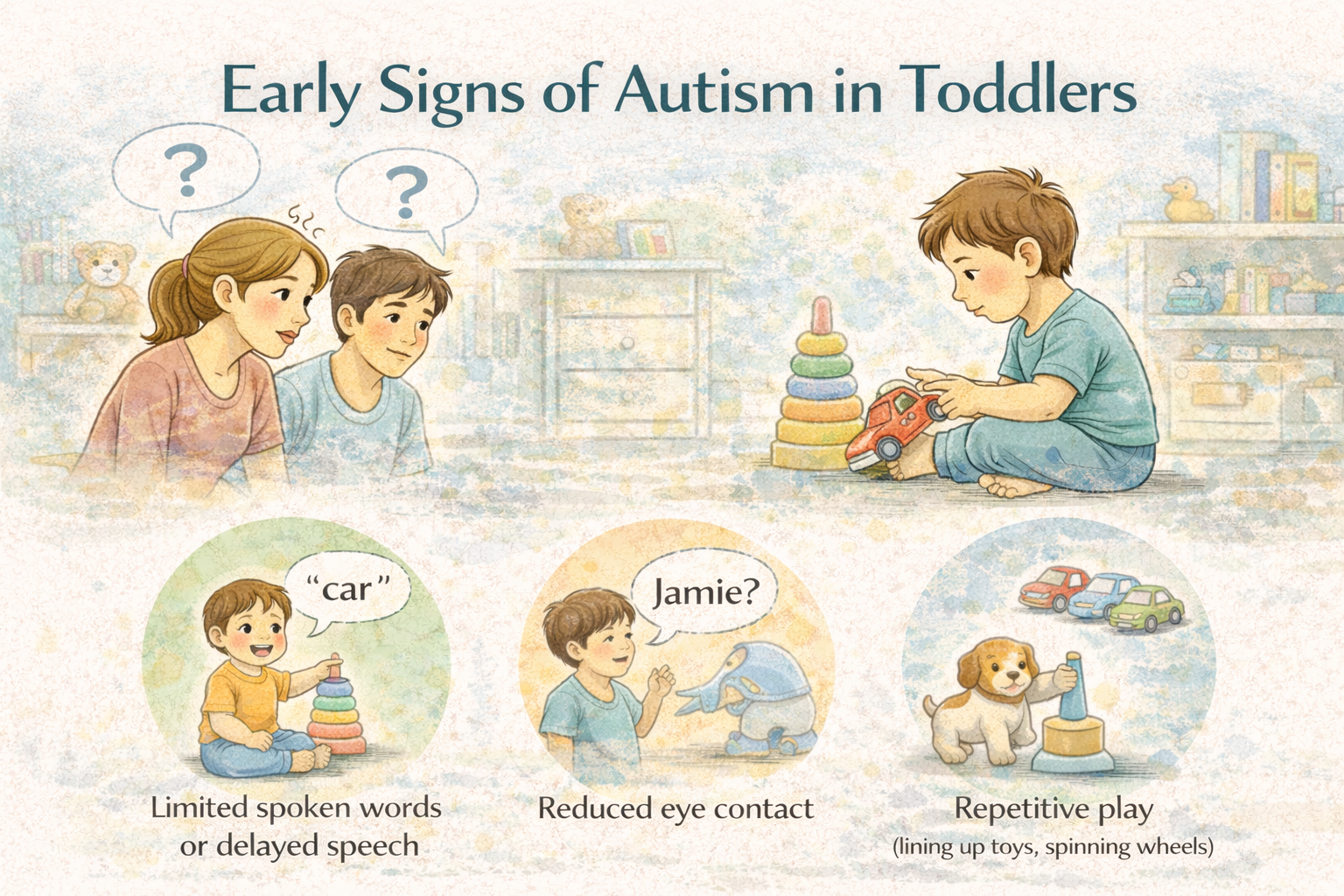
- Limited spoken words or delayed speech
- Little use of gestures (pointing, waving)
- Reduced eye contact
- Not responding consistently to their name
Social Interaction Differences – Early Signs of Autism in Toddlers
- Limited interest in people
- Difficulty with turn-taking or shared play
- Prefers playing alone
Play and behaviour differences – Early Signs of Autism in Toddlers
- Repetitive play (lining up toys, spinning wheels)
- Strong reactions to changes in routine
- Sensitivity to sounds, textures, or lights
A child does not need to show all of these signs to be autistic.
Speech Delay vs Autism – Early Signs of Autism in Toddlers
Speech delay alone does not mean autism.
Some children:
- Are late talkers with good social interaction
- Catch up with the right support
However, the speech delay, combined with differences in social communication and interaction, warrants further exploration.
Why Early Support Matters
Early support helps children:
- Communicate in ways that work for them
- Reduce frustration and meltdowns
- Build confidence and connection
- Develop functional communication skills
Support is about understanding your child, not changing who they are.
3 Helpful Things Parents Can Do Now
While waiting for NHS assessments, you can support communication by:
- Following your child’s lead
Join their play rather than directing it. - Reducing language pressure
Use simple language instead of asking many questions. - Using visual support
Gestures, routines, and visuals can support understanding.
These strategies are often used in speech and language therapy for autistic children.
Long NHS Waiting Times: What Next?
Many families experience long waits for autism and speech therapy assessments. This waiting period can feel overwhelming — but it doesn’t mean you have to do nothing.
For parents seeking structured, therapist-led guidance, my speech therapy books and printable PDFs offer practical strategies you can use immediately at home.
For families needing ongoing support, my online 6-month course offers step-by-step guidance, education, and practical tools to support communication, reduce stress, and build confidence over time.
Click the link to grab your copy of my Autism books.
https://mybook.to/UnderstandingAutism1
https://mybook.to/UAPTpersonalcare
https://mybook.to/AutismParenting
https://mybook.to/UAPTpersonalcare
There are also Spanish versions of these books available
https://mybook.to/UAbundleSpanish
Noticing early signs doesn’t mean you’re jumping to conclusions — it means you’re paying attention.
Whether your child receives a diagnosis or not, early support for communication helps. Trust your instincts and seek guidance that feels right for your family.